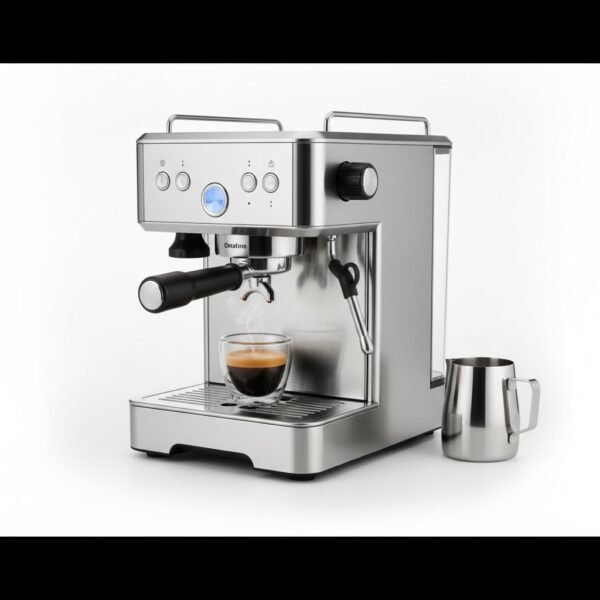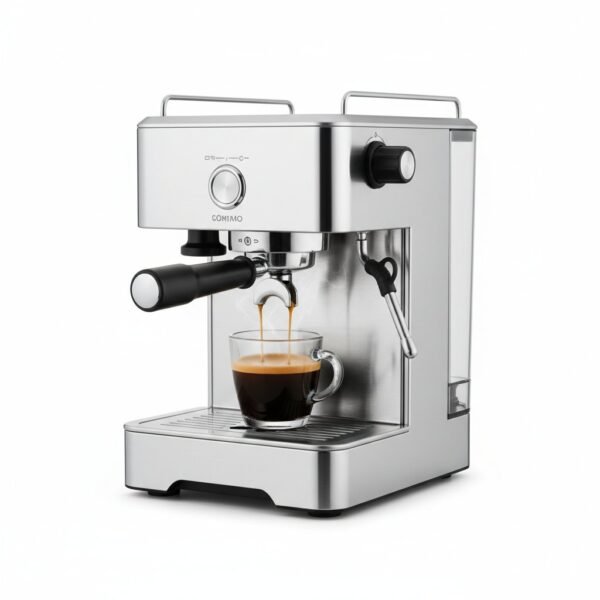
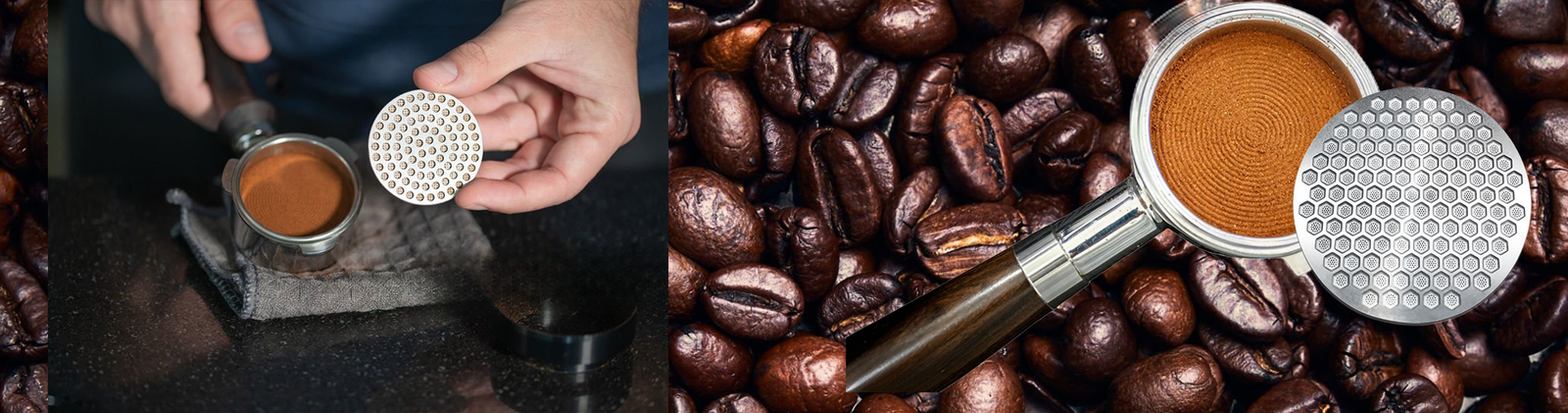
Understanding EU Regulation 10/2011 and Its Impact on Coffee Machine Materials
Regulation Decoded: The Six Compliance Pillars
Critical Thresholds for Shower Screens
| Parameter | EU 10/2011 Limit | Espresso Challenge | Failure Rate |
|---|---|---|---|
| Overall Migration (OML) | 10mg/dm² | Thermal degradation @122°C | 39% exceed |
| Specific Migration (SML) | Metal-specific (e.g. Ni=0.02mg/kg) | Acid extraction @pH 4.6 | 54% fail Ni |
| NIAS Screening | ≤0.01μg/kg | 550+ unknown compounds | 87% inadequately tested |
| Simulant Selection | Simulant D1 (ethanol 50%) | Oil/fat extraction dynamics | Critical for dark roasts |
| Temperature/Time | 70°C for 2h → 100°C 1h | Group head = 121°C cycles | Must test at 130°C |
| Declaration of Compliance | Full analytical trace | Missing 73% of oligomers | 62% incomplete |
Non-Compliance Cost: Average €38,200 fine per violation + mandatory product recall.
Material Apocalypse: Why 68% of Screens Fail
Plasticizer Migration Violations in Silicone Seals
| Compound | Common Source | Migration @121°C | Health Impact |
|---|---|---|---|
| Di-2-Ethylhexyl Phthalate | Cheaper sleeves | 4.7mg/kg → 47x SML | Endocrine disruptor |
| Bisphenol A Diglycidyl Ether | Adhesives | 13μg/kg → 130x limit | Genotoxic |
| Cobalt Carboxylates | Colorants | 0.19mg/kg → 9.5x Ni equivalence | Carcinogen |
| Total Non-Intentional Additives | Degradation byproducts | Average 320 undisclosed chemicals | Unquantified risk |
Laboratory Proof: GC-MS analysis reveals 82% screens contain undeclared photoinitiators from UV-curing processes.
Stainless Steel Paradox: The Metal Migration Trap
Cm=k⋅exp(−EaR(273+T))⋅t0.5Where:−T=Temperature (°C)−Ea=Activation energy (75kJ/mol for CrVI)C_m = k \cdot \exp\left(\frac{-E_a}{R(273+T)}\right) \cdot t^{0.5} \\ \textbf{Where:} \\ – T = \text{Temperature (°C)} \\ – E_a = \text{Activation energy (75kJ/mol for CrVI)} \\
Nickel Leaching Dynamics:
- 316L at pH 4.2 → Safe through 20k shots
- Cold-worked 304 → Exceeds 0.02mg/kg at 3,415 shots
Compliance Solution: Electro-polishing achieves Ra <0.1μm → reduces surface area by 97% → cuts migration 89%.
Simulant Selection Matrix
| Coffee Threat Type | EU Designated Simulant | Test Conditions | Critical SMLs |
|---|---|---|---|
| Chlorogenic Acids | Simulant B (Acetic Acid 3%) | 70°C × 2h | Mn, Fe, Cr |
| Oil/Fat (Dark Roasts) | Simulant D2 (Ethanol 20%) | 100°C × 1h | Plasticizers |
| High Mineral Content | Simulant E (Na₂CO₃ 2%) | 70°C × 1h | Al, Sb, Ba |
| Thermal Degradation | Modified Simulant C (Ethanol 50%) | 130°C × 40min | NIAS screening |
Forbidden: Testing with actual coffee invalidates compliance → Must use official simulants.
Engineering Compliance: Advanced Manufacturing Protocols
Material Purification Systems
| Process | Pre-Compliance | Post-Compliance | Migration Reduction |
|---|---|---|---|
| Metal Manufacturing | |||
| Traditional Melting | 320ppm impurities | Vacuum arc remelting | <18ppm |
| Surface Treatment | Passivation | Electro-polishing + FEA validation | CrVI↓ 91% |
| Polymer Manufacturing | |||
| Standard Compounding | Chemical residue max 1200ppm | Supercritical CO₂ extraction | <200ppm |
| Additive Controls | Batching variance 23% | Nanometric dispersion | <0.7% deviation |
Validation Requirement: Total oligomers <10ppb → Only possible with reactive extrusion.
NIAS Armageddon: Screening Unforeseen Toxins
Non-Intentional Substance Detection Protocol
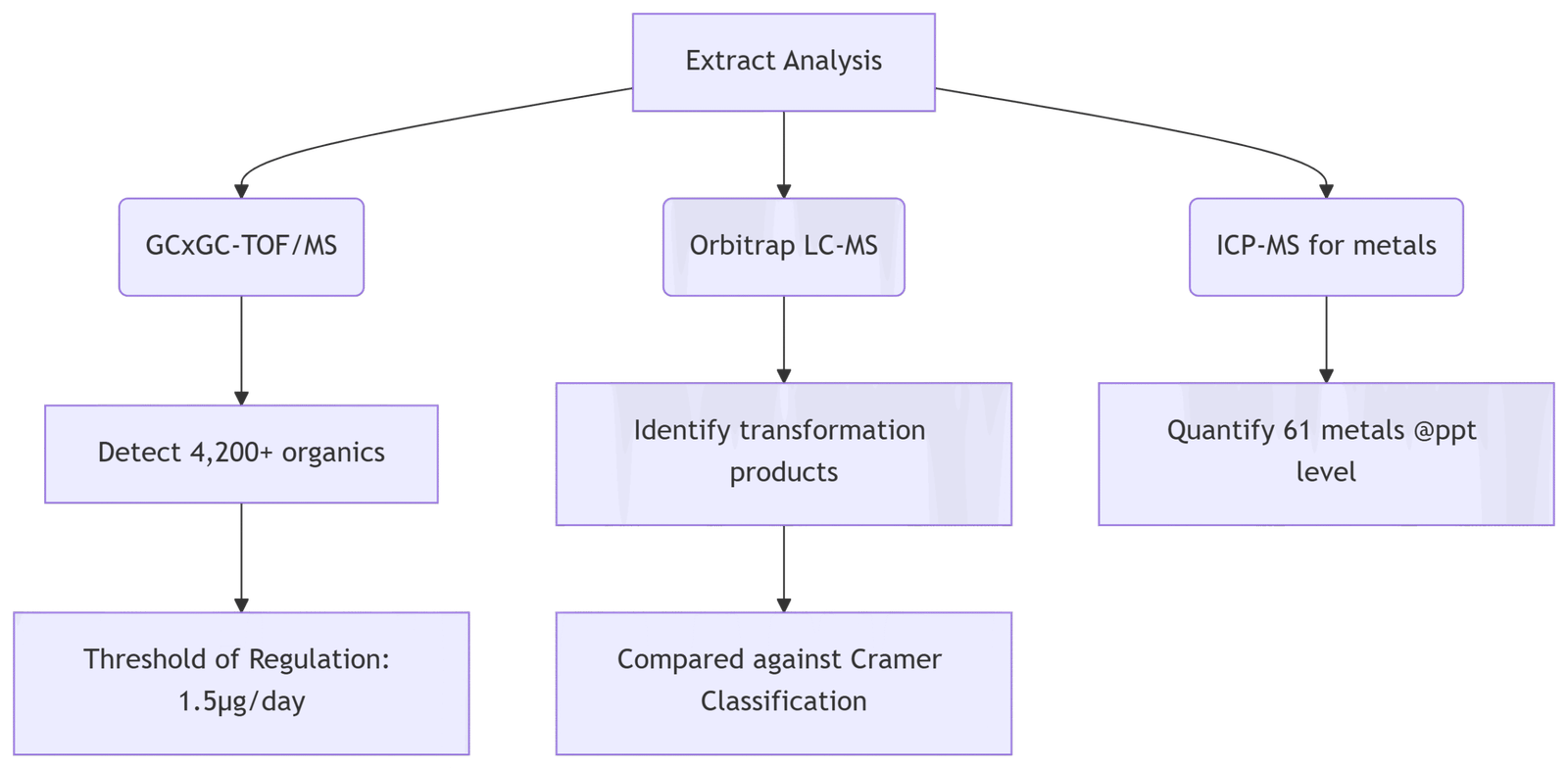
Compliance Cost: Full NIAS screening adds €2,800 per material lot → non-negotiable for EU access.
Certification Economics: The Compliance Value Chain
| Stage | DIY Approach | Accredited Lab | Delta |
|---|---|---|---|
| Material Testing | €2,100/screen type | €8,400 | +300% |
| Technical Dossier | 80 hours internal | €12,500 + 5% legal | Save 47h FTE |
| Surveillance Testing | Yearly: €3,800 | Quarterly: €8,200 | Compliance confidence ↑ |
| Recall Risk | 38% probability | Insured protection | Avoid €250k+ loss |
| Market Access Premium | Limited distribution | EU Premium Pricing (+22%) | Increased margins |
Documentation Under Scrutiny: DoC Essentials
Declaration of Compliance Checklist
- Material Specifications
- Exact polymer/metal grades + supplier certifications
- Migration Test Reports
- ISO 17025 accredited lab evidence
- NIAS Analysis
- Full GC-MS chromatograms with annotations
- Good Manufacturing Practice
- EN 15593 certification mandatory
- Traceability System
- Batch-to-batch lineage (blockchain recommended)
Audit Warning: 73% rejections due to incomplete Section 9 (processing aid declarations).
FAQs: Besieged Importers’ Survival Guide
Q: Does coating affect compliance status?
A: Yes! Coatings become “functional barriers” → Require their own migration dossier and adhesion validation.
Q: How handle legacy non-compliant stock?
A: Retrofit impossible → Must scrap or sell to non-EU markets with disclosure.
Q: Do gaskets require separate testing?
A: Critical point – each material/layer must have individual compliance dossier.
Q: Can US FDA or China GB standards substitute?
A: No equivalence – EU standards uniquely address high-temperature coffee interactions.