

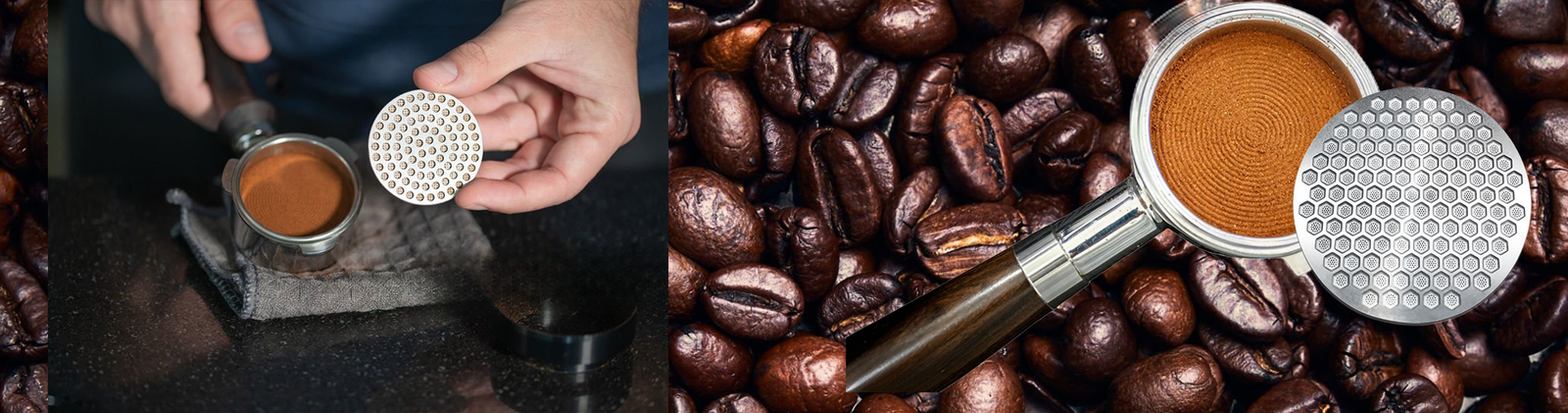
Thermal Conductivity of Stainless Steel Shower Screens: Impact on Extraction Temperature
Thermal Conductivity of Stainless Steel Shower Screens: Impact on Extraction Temperature
As distributors and OEM partners, you understand the critical role of precision and consistency in achieving exceptional espresso. Every component, from the boiler to the portafilter, contributes to the final cup. Among these often-overlooked components, the shower screen plays a significant, yet subtle, role in maintaining optimal extraction temperature. This article delves into the thermal conductivity of stainless steel shower screens and its impact on espresso extraction, providing you with the technical insights needed to make informed decisions about the products you offer and represent.
Understanding Thermal Conductivity
Thermal conductivity is a material’s ability to conduct heat. It’s quantified as the amount of heat (in Watts) that flows through a material of a specific thickness (in meters) per degree Celsius (or Kelvin) temperature difference. Materials with high thermal conductivity, like copper or aluminum, transfer heat quickly and efficiently. Conversely, materials with low thermal conductivity, such as wood or plastic, resist heat transfer.
Stainless steel, commonly used in espresso machine components, including shower screens, falls somewhere in the middle of the thermal conductivity spectrum. The specific thermal conductivity of stainless steel varies depending on the alloy composition, particularly the chromium and nickel content. Generally, austenitic stainless steels, such as 304 or 316, possess a thermal conductivity in the range of 12-16 W/m·K at room temperature. This means that stainless steel can conduct heat, but not as rapidly as materials like copper (around 400 W/m·K).
The Shower Screen’s Role in Temperature Stability
The shower screen serves two primary functions: dispersing water evenly across the coffee puck and contributing to temperature stability during extraction. As hot water from the group head passes through the shower screen, it experiences a slight temperature drop due to heat transfer to the screen itself, and then from the screen to the colder coffee puck. The magnitude of this temperature drop is influenced by several factors, including:
- Shower Screen Material: Stainless steel’s thermal conductivity determines how quickly it can transfer heat away from the water and towards the coffee puck, and towards the surrounding grouphead.
- Shower Screen Mass and Thickness: A thicker, more massive shower screen will require more energy (heat) to raise its temperature, leading to a more significant initial temperature drop in the water as it passes through. However, a more massive screen will also act as a better thermal buffer, maintaining temperature more consistently during longer extractions.
- Group Head Temperature: The temperature of the group head surrounding the shower screen significantly impacts its temperature. A well-heated group head will help maintain the shower screen’s temperature and minimize temperature fluctuations.
- Water Temperature: The temperature of the water entering the shower screen directly influences the shower screen’s temperature. A higher water temperature will result in a higher shower screen temperature.
- Ambient Temperature: The surrounding ambient temperature also plays a role. A colder environment will lead to a greater heat loss from the shower screen.
Impact on Extraction Temperature
The initial temperature drop of the water as it passes through the shower screen is crucial. If the screen is too cold, it can lead to underextraction, resulting in a sour and weak espresso. Conversely, if the screen is too hot (e.g. if the grouphead is overheating), it can lead to overextraction, resulting in a bitter and harsh espresso. The goal is to maintain a stable and optimal water temperature as it reaches the coffee puck.
The thermal conductivity of stainless steel, coupled with its mass and the overall thermal management of the espresso machine, determines how effectively the shower screen can maintain this optimal temperature. A shower screen with a carefully chosen thickness and material, coupled with a stable group head temperature, will contribute to a more consistent and predictable extraction process.
Optimizing Shower Screen Design for Thermal Stability
Manufacturers employ several strategies to optimize shower screen design for improved thermal stability. These include:
- Material Selection: While stainless steel is the most common material due to its durability, corrosion resistance, and compliance with food safety standards, the specific alloy grade can be chosen to fine-tune its thermal conductivity properties.
- Thickness Optimization: Balancing the screen’s thickness is critical. Thicker screens provide greater thermal mass and stability but require more preheating. Thinner screens heat up quicker but offer less thermal inertia.
- Surface Area and Geometry: The surface area of the shower screen in contact with the group head directly impacts heat transfer. The geometry of the shower screen (e.g., flat vs. convex) can also influence water dispersion and temperature distribution.
- Integration with Group Head Design: A well-designed group head will effectively transfer heat to the shower screen, helping to maintain its temperature. The design should minimize heat loss and ensure even temperature distribution across the screen.
Considerations for Distributors and OEM Brands
As distributors and OEM partners, understanding the implications of shower screen thermal conductivity can help you make informed decisions about product selection and branding.
- Highlight Temperature Stability: Emphasize the importance of temperature stability in your marketing materials. Explain how the shower screen contributes to consistent espresso quality.
- Consider Customization Options: Explore opportunities to offer customized shower screens with varying thicknesses or materials to cater to specific customer preferences or brewing styles.
- Provide Technical Specifications: Include detailed technical specifications for your shower screens, including material composition, thermal conductivity (if available), and dimensions.
- Emphasize Grouphead Synergy: Articulate how your shower screens are designed to work seamlessly with the grouphead for optimal temperature management.
- Address Preheating Protocols: Provide clear guidelines to end-users on optimal preheating procedures to ensure the shower screen reaches the correct temperature before extraction.
Benefits of an Optimized Shower Screen
- Improved Extraction Consistency: Consistent temperature throughout the brewing process leads to more predictable and repeatable extractions.
- Enhanced Flavor Profiles: Optimal temperature unlocks the full potential of the coffee beans, resulting in more balanced and nuanced flavor profiles.
- Reduced Channeling: Even water distribution prevents channeling and ensures that the entire coffee puck is evenly saturated.
- Increased Customer Satisfaction: Consistent and high-quality espresso leads to happier customers and stronger brand loyalty.
- Extended Equipment Lifespan: Properly designed and maintained shower screens can contribute to the overall longevity of espresso machines.
Summary
The thermal conductivity of stainless steel shower screens plays a crucial role in maintaining optimal extraction temperature in espresso machines. By understanding the principles of heat transfer and optimizing shower screen design, manufacturers can create products that contribute to more consistent, flavorful, and satisfying espresso. As distributors and OEM partners, leveraging this knowledge can enhance your product offerings and strengthen your position in the competitive espresso market by demonstrating a commitment to quality and technical excellence. Continuously refining the interplay between material selection, shower screen design, and group head integration is key to pushing the boundaries of espresso extraction perfection.


