The Unsung Hero: Why Your Espresso Puck Screen Matters More Than You Think
Introduction: The Overlooked Game-Changer in Espresso Brewing
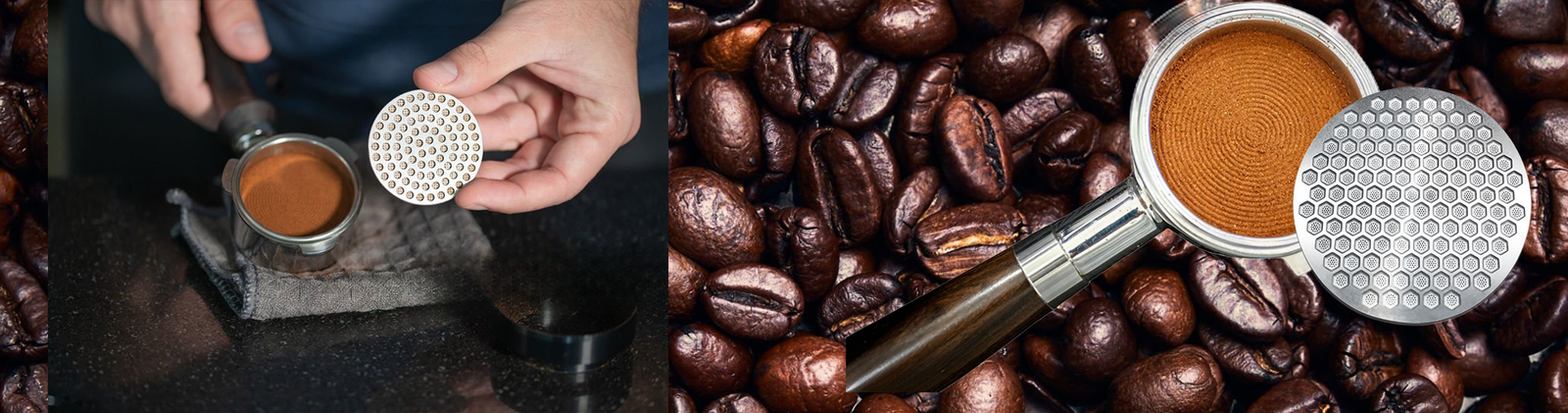
When baristas and coffee enthusiasts debate espresso quality, they obsess over grind size, tamp pressure, and machine pressure. But one critical component often goes unnoticed—the espresso puck screen (or dispersion screen). This unassuming metal disc is the guardian of uniform extraction, ensuring water distributes perfectly across your coffee puck.
Manufactured through precision chemical etching to micrometer-level accuracy, high-end puck screens like those from Caffepress are engineered to eliminate channeling, improve clarity, and maximize flavor. Whether you’re an importer sourcing commercial equipment or a home barista chasing cafe-quality shots, understanding puck screen science is non-negotiable.
Why Puck Screens Matter: The Science of Even Extraction
Espresso extraction hinges on uniform water flow. Without a well-designed dispersion screen:
- Water erodes preferential paths (channeling), leading to uneven extraction.
- The center of the puck gets over-extracted (bitterness), while the edges under-extract (sourness).
- Inconsistent shots waste coffee and frustrate baristas.
A precision-etched puck screen solves this by:
✔️ Breaking water into micro-streams for even saturation.
✔️ Preventing “donut extraction” (weak outer edges).
✔️ Extending coffee bed longevity by reducing erosion.
Case Study: A Café Chain’s “Aha” Moment
In 2021, a specialty coffee chain in Germany reduced daily bean waste by 18% after switching to chemically etched puck screens. Their head barista reported more balanced extractions and longer-lasting coffee pucks—proving that small hardware upgrades can have outsized impacts.
Puck Screen Manufacturing: Why Etching Beats Stamping
Not all puck screens are equal. Mass-produced stamped screens often have:
- Inconsistent hole sizing → turbulent water flow.
- Burred edges → fines migration into the cup.
- Limited durability → warping under heat.
Chemically etched puck screens (like ours) offer:
🔹 Laser-precision holes (typically 0.3–0.5mm) for controlled dispersion.
🔹 Smooth, deburred edges to prevent clogging and fines.
🔹 Stainless steel grade 304/316 for heat/corrosion resistance.
Buyer’s Guide: How to Choose the Right Puck Screen
For importers/distributors, key specs to vet:
| Feature | Low-Quality Screen | Premium (Etched) Screen |
|---|---|---|
| Hole Uniformity | Irregular | Microscopically even |
| Material | Coated carbon steel | Surgical-grade stainless |
| Durability | Warps at 150°C+ | Stable beyond 200°C |
For baristas/cafés:
- Match hole size to your basket diameter (e.g., 58mm for standard machines).
- Prioritize easy cleaning (etched screens resist coffee oil buildup).
Industry Trends: The Rise of “Smart” Puck Screens
Innovations driving global demand:
- Nano-coated screens (reduced residue adhesion).
- Custom hole patterns for specific brew styles (e.g., turbo shots).
- Traceable sourcing (EU/US buyers now demand material certifications).
DIY Test: Is Your Puck Screen Failing You?
Signs you need an upgrade:
- Frequent spurting or uneven extractions.
- Visible corrosion or scale buildup.
- Puck fractures after extraction.
Conclusion: Don’t Let Poor Water Distribution Ruin Your Shots
A puck screen might be tiny, but its impact on espresso quality is massive. For importers, stocking chemically etched screens means equipping clients with tools for excellence. For brewers, it’s the silent partner in achieving that god-tier shot.
Explore Caffepress’s precision-etched puck screens—engineered in Dongguan, trusted worldwide.
FAQs
Q: How often should I replace my puck screen?
A: With proper cleaning (weekly backflushes), etched screens last 2–3 years.
Q: Do puck screens work with pressurized baskets?
A: No—they’re designed for traditional non-pressurized baskets.
Q: Can I use a puck screen for other brewing methods?
A: They’re optimized for espresso’s high pressure, not pour-over/AeroPress.