Surface Roughness of Etched Shower Screens and Its Impact on Extraction
Surface Roughness of Etched Shower Screens and Its Impact on Extraction
As a distributor or OEM brand partner of Caffepress, you understand the critical role each component plays in achieving optimal coffee extraction. While many factors contribute to the final brew, one often-overlooked element is the surface roughness of our etched shower screens. This article delves into the technical aspects of surface roughness and how it directly impacts water dispersion, saturation, and ultimately, the quality of the extracted coffee.
Understanding Surface Roughness: Ra, Rz, and Beyond
Surface roughness is a measure of the texture of a surface, quantified by the deviations in height of the surface from a mean plane. It’s not simply about whether a surface feels smooth or rough to the touch; it’s a precisely measured characteristic with profound implications for fluid dynamics, in this case, the flow of hot water through the shower screen.
- Ra (Arithmetic Mean Roughness): This is the most commonly used parameter for describing surface roughness. It represents the average absolute deviation of the roughness profile from the mean line. A lower Ra value indicates a smoother surface.
- Rz (Ten-Point Mean Roughness): Rz calculates the average difference between the five highest peaks and the five lowest valleys within a defined evaluation length. This parameter is more sensitive to extreme peaks and valleys than Ra, offering a different perspective on the surface topography.
- Other Parameters: While Ra and Rz are primary, other parameters like Rq (Root Mean Square Roughness), Rv (Maximum Valley Depth), and Rp (Maximum Peak Height) can provide more detailed information for specific applications. Caffepress utilizes various of these measurements to ensure stringent quality control during manufacturing.
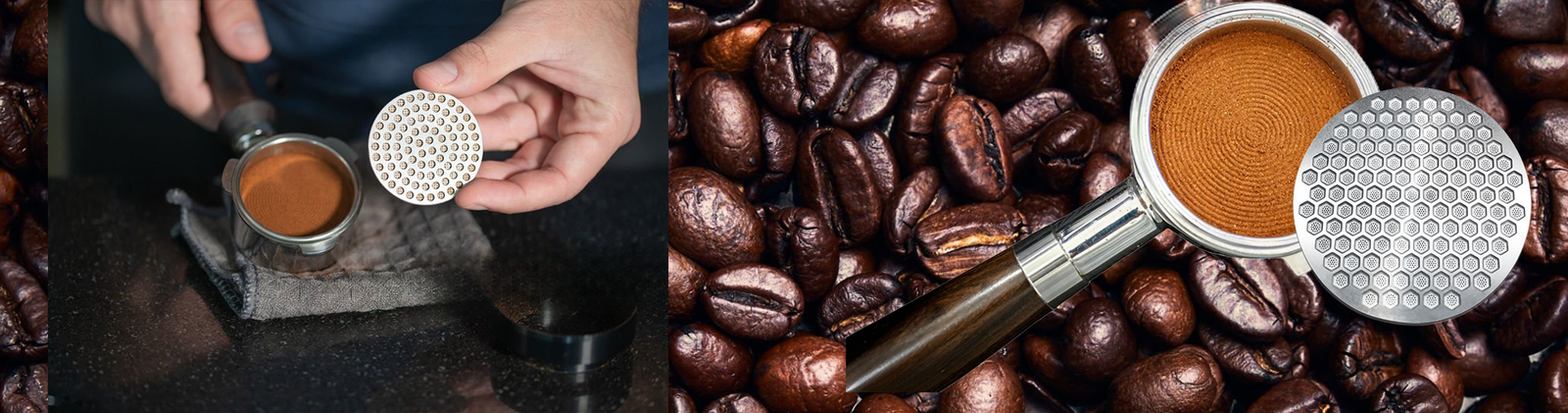
At Caffepress, we utilize precision laser etching to create shower screens with carefully controlled surface roughness. We use profilometers, highly sensitive instruments that measure surface deviations, to ensure each batch meets our rigorous specifications.
The Crucial Role of Surface Roughness in Water Dispersion
The surface roughness of a shower screen directly influences how water spreads across the coffee puck. A screen that is too smooth may cause water to bead and channel, leading to uneven saturation. Conversely, a screen that is too rough may impede water flow, resulting in under-extraction in certain areas.
Optimal Roughness for Even Saturation
Our research and development teams have identified an optimal range of surface roughness for our shower screens. This range allows for:
- Improved Water Film Formation: A controlled level of roughness promotes the formation of a thin, even film of water across the screen’s surface. This film then distributes the water more uniformly across the coffee grounds.
- Reduced Channeling: The textured surface helps to disrupt the formation of water channels, preventing localized over-extraction and ensuring consistent saturation.
- Enhanced Surface Tension Interaction: The carefully etched surface encourages optimal interaction between the water and the coffee puck, promoting thorough wetting of the grounds.
How Surface Roughness Compares to Other Screen Designs
Traditional shower screens, often employing stamped or punched designs, typically exhibit uncontrolled and inconsistent surface roughness. This can lead to unpredictable water dispersion and extraction issues. Our laser etching process provides significantly greater control, resulting in superior performance.
Extraction and Flavor Profile: The Direct Impact
The even saturation achieved through controlled surface roughness directly translates into a more balanced and nuanced extraction, enhancing the final flavor profile. Uneven saturation, on the other hand, can result in:
- Under-extraction: Sour, weak flavors due to insufficient water contact with the coffee grounds.
- Over-extraction: Bitter, astringent flavors resulting from excessive water contact and the extraction of undesirable compounds.
- Inconsistent Results: Brew-to-brew variation due to unpredictable water dispersion.
By optimizing the surface roughness of our shower screens, Caffepress ensures that the water is evenly distributed across the coffee puck, promoting a consistent and balanced extraction that unlocks the full potential of the coffee beans.
Maintaining Optimal Surface Roughness: Cleaning and Care
While our shower screens are designed for durability, proper cleaning and maintenance are essential to preserving their optimal surface roughness and performance. Build-up of coffee oils and minerals can alter the surface characteristics, negatively affecting water dispersion. We recommend the following cleaning procedures:
- Regular Backflushing: Backflushing with a suitable espresso machine cleaner helps to remove coffee oils and residue from the shower screen and group head.
- Periodic Soak: Soaking the shower screen in a solution of espresso machine cleaner and hot water can help to dissolve stubborn build-up.
- Gentle Scrubbing: If necessary, use a soft brush or cloth to gently scrub the shower screen. Avoid abrasive cleaners or scouring pads, as these can damage the surface and alter its roughness.
- Inspection: Regularly inspect the shower screen for signs of wear or damage. Replace the screen as needed to ensure optimal performance.
Following these guidelines will help maintain the integrity of the etched surface, preserving the designed roughness, and ensuring consistently superior extraction results.
Summary
The surface roughness of Caffepress etched shower screens is a critical factor in achieving optimal coffee extraction. By controlling the roughness through precision laser etching, we ensure even water dispersion, minimize channeling, and promote a balanced flavor profile. Understanding the principles of surface roughness, and following proper cleaning and maintenance procedures, will allow you and your customers to consistently produce exceptional espresso.