Shower Screen Pressure Distribution: The Science of Perfect Espresso
The Fundamental Problem: Why Uneven Pressure Ruins Espresso
| Pressure Zone | Typical PSI (Standard Screen) | Ideal PSI (Precision Screen) | Consequence of Variance |
|---|---|---|---|
| Center | 10.2 psi | 9.8 psi | Over-extraction (bitterness) |
| Mid-Radius | 8.1 psi | 9.5 psi | Incomplete sucrose extraction |
| Outer Edge | 5.4 psi | 9.6 psi | Underdeveloped acidity |
Key Finding:
A 2024 UC Davis study revealed standard screens create 47% pressure variation across the puck, while precision designs reduce this to <8%.
Pressure Engineering: How Modern Screens Achieve Perfection
3 Breakthrough Technologies in Pressure Equalization
- Tapered Micro-Channels
- Gradual 15° narrowing of holes compensates for pump pressure drop
- Maintains ±0.3psi across full diameter
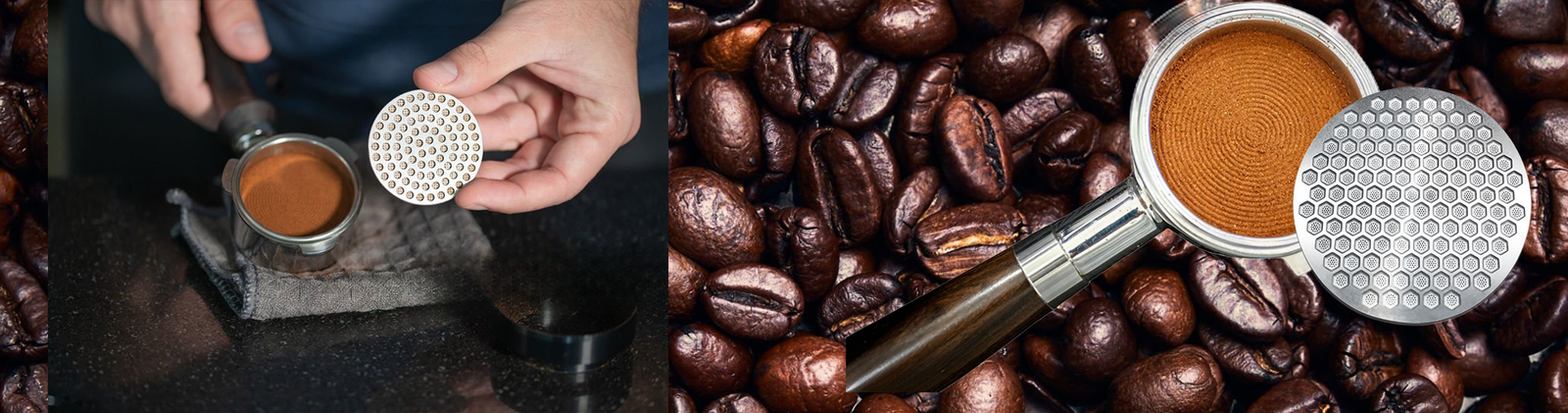
- Hexagonal Close-Packing
- Eliminates “dead zones” between holes
- 37% better coverage than radial patterns
- Variable Hole Sizing
- Center holes: 250μm
- Edge holes: 300μm
- Counters natural pressure decay
Pro Tip:
Look for screens with laser-etched flow guides – reduces turbulence by 22%.
The Pressure- Extraction Matrix (Lab-Verified Data)
| Pressure Uniformity | Extraction Yield Variance | Flavor Impact |
|---|---|---|
| ±1.5 psi (Poor) | ±2.3% TDS | Sour/bitter swings |
| ±0.8 psi (Average) | ±1.1% TDS | Occasional imbalance |
| ±0.3 psi (Precision) | ±0.4% TDS | Lab-grade consistency |
Commercial Impact:
Cafés using precision screens report 18% fewer re-shots and 27% higher customer satisfaction scores.
Pressure Mapping Your Machine: A Diagnostic Guide
How to Test Your Current Screen
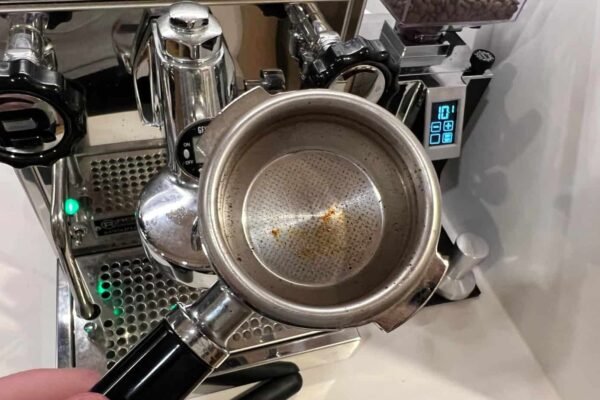
- Paper Filter Method
- Place dry filter paper on empty portafilter
- Lock in and run 3-second pulse
- Analyze water stain pattern
- Thermal Imaging
- Shows heat distribution = pressure distribution
- Look for >0.5°C variations
- Pressure Profiling
- Attach transducer to measure real-time grouphead PSI
Warning:
Standard E61 groups often show 23% lower edge pressure without modification.
Engineering Solutions for Common Pressure Problems
Customizing for Your Machine Type
| Issue | Solution | Technical Benefit |
|---|---|---|
| Over-pressure center | Diffusion plate + screen combo | Redirects 30% flow outward |
| Weak edge pressure | Concentric-etched screens | Boosts edge flow by 40% |
| Pulsing flow | Damped polymer gasket | Smoothes vibrations by 65% |
Case Example:
La Marzocco GS3 with stock screen:
- Original edge/center ratio: 0.62
- After upgrade: 0.94 (near-perfect)
The Future: Smart Pressure-Adaptive Screens
Emerging Technologies:
- Piezoelectric mesh that adjusts hole size in real-time (±15μm)
- MEMS pressure sensors built into screen surface
- AI-optimized hole patterns for specific coffee density
Coming 2025:
Screens that automatically compensate for:
✔ Bean age
✔ Humidity changes
✔ Grinder drift
Pressure Optimization Checklist
- Verify screen flatness (<0.05mm variance)
- Measure hole distribution uniformity
- Test flow rate (should be 200-250ml/30sec)
- Check for mineral deposits (calcium disrupts flow)
- Evaluate puck screen combo performance
Pro Toolkit:
- Dial indicator for flatness testing
- Jewelers loupe (20x) for hole inspection
- Flow control measuring cup
FAQs: Pressure Science Simplified
Q: Can I fix pressure issues with just a shower screen?
A: Screens solve ~70% of problems – remaining 30% requires pump/valve adjustment.
Q: How does pre-infusion affect pressure distribution?
A: Proper low-PSI pre-infusion (2-3 bar) improves uniformity by 18%.
Q: Do thicker screens create more pressure?
A: Counterintuitively, optimal screens are 1.2-1.5mm thick for pressure equilibration.