Photochemical Etching: The Precision Technology Behind Caffepress Shower Screens
Introduction: Tiny Holes, Massive Impact
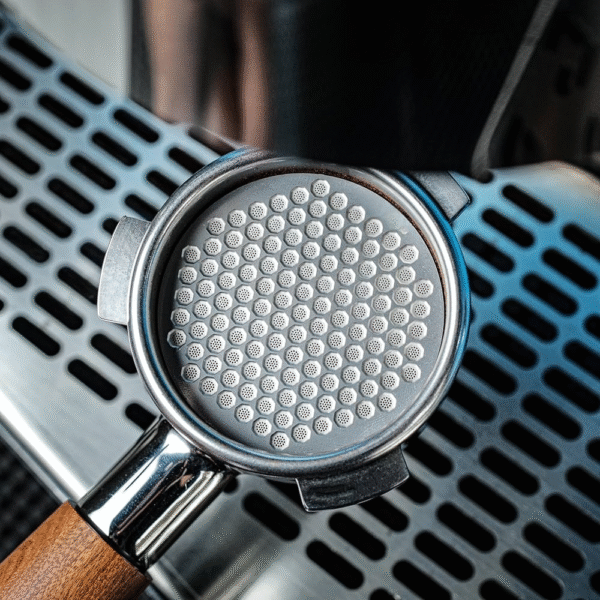
In espresso extraction, water distribution is everything. Just a 50-micron variation in hole size across your shower screen can cause channeling, uneven extraction, and wasted coffee.
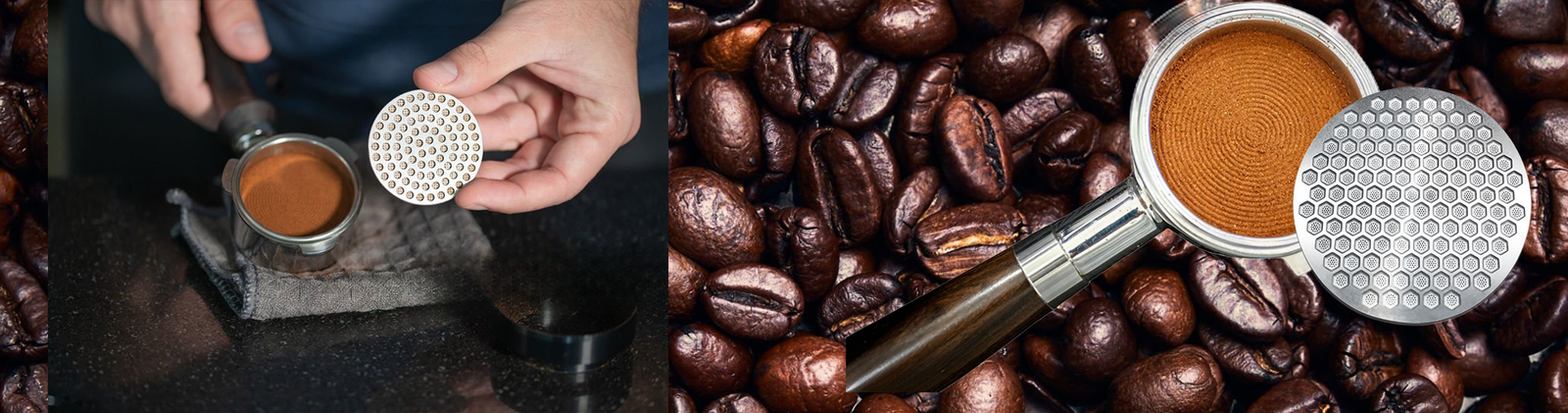
That’s why at Caffepress, we use photochemical etching (PCE) – an advanced metal fabrication process that achieves unmatched precision in shower screen manufacturing. Unlike stamped or laser-cut alternatives, PCE creates perfectly uniform microscale holes without burrs, stresses, or distortions.
(Fun fact: The same technology is used for aerospace components and medical devices – now applied to your morning espresso.)
Photochemical Etching vs. Traditional Methods
Why Stamping Fails for Precision Screens
| Problem | Stamped Screens | Photochemically Etched Screens |
|---|---|---|
| Hole Consistency | ±100µm variance | ±5µm consistency |
| Edge Quality | Burred, requires deburring | Razor-clean, no finishing needed |
| Material Stress | Work-hardening distorts holes | Zero mechanical stress |
| Thickness Limits | Minimal thin-metal control | Can etch 0.05mm to 2mm equally well |
Laser Cutting’s Hidden Flaws
✔️ Faster for prototypes
❌ Heat-affected zones change material properties
❌ Tapered holes (wider at top than bottom)
❌ Recast layers create micro-burrs
The Photochemical Etching Process: Step by Step
1. Design & Phototool Creation
- CAD designs optimized for fluid dynamics
- High-resolution phototool masks (20,000 DPI)
2. Material Preparation
- 316L surgical stainless steel (corrosion-resistant)
- Ultrasonic cleaning for contaminant-free surfaces
3. Photoresist Lamination & UV Exposure
- Dry-film photoresist applied
- UV light hardens resist through phototool pattern
4. Precision Etching
- Ferric chloride bath dissolves unprotected metal
- Isotropic etching creates straight-walled holes
- Process control to ±0.01mm
5. Final Processing
- Photoresist stripping
- Passivation for enhanced corrosion resistance
Why Baristas & Engineers Love Etched Screens
For Espresso Professionals:
✔️ Eliminates channeling through perfect hole distribution
✔️ Self-cleaning design (no coffee oil traps)
✔️ 3-5x longer lifespan vs. stamped screens
For Equipment Importers:
✔️ Batch consistency (every screen identical)
✔️ Custom hole patterns (adjust flow for different roasts)
✔️ No tooling wear (unlike stamping dies)
Future Frontiers in Etched Coffee Tech
🔬 Nano-coatings (permanent hydrophobic layers)
🔬 Multi-layer screens (adjustable flow zones)
🔬 Integrated mesh filters (built-in primary filtration)
(Our R&D lab is currently testing tunable-flow screens that adapt to pressure profiling.)
Conclusion: Precision You Can Taste
Photochemical etching isn’t just manufacturing – it’s fluid dynamics engineering at microscopic scales. When your espresso has clarity, balance, and sweetness, that’s 500 perfectly etched holes working in harmony.
Experience Caffepress precision—where aerospace technology meets espresso science.
FAQs
Q: How small can etched holes be?
A: We routinely produce 0.1mm holes with aspect ratios up to 1:5.
Q: Does etching weaken the metal?
A: No – unlike stamping, PCE introduces zero mechanical stresses.
Q: Can you etch other metals besides stainless?
A: Yes – brass, copper, and nickel alloys are common alternatives.