Mechanical Strength and Deformation Resistance of Stainless Steel Shower Screens
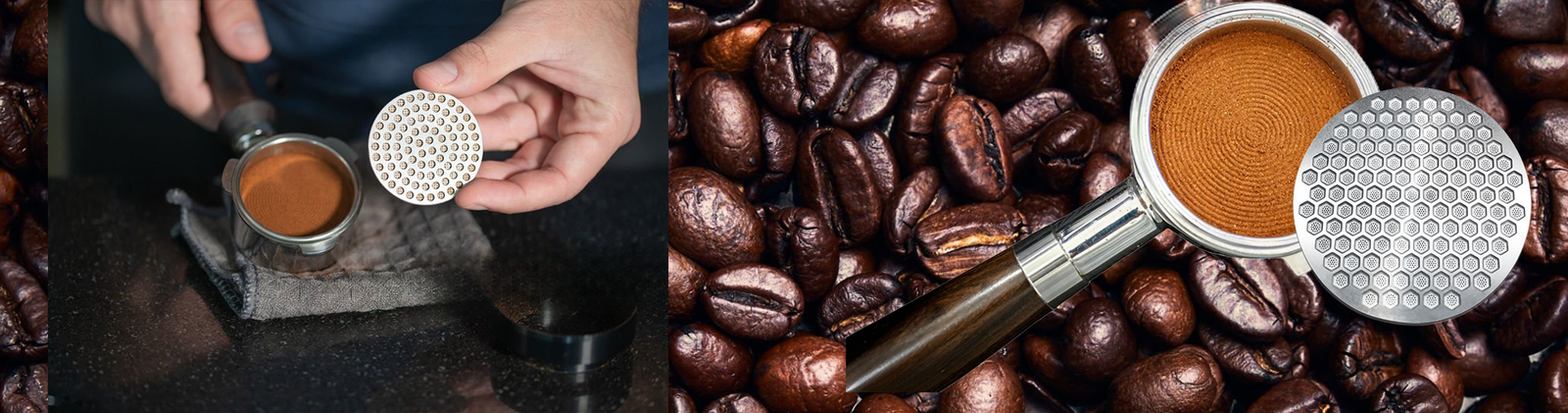
Espresso puck screens face relentless mechanical stress—9+ bars of pressure, daily cleaning abrasion, and accidental drops. Unlike cheaper alternatives, stainless steel’s inherent durability prevents warping, cracking, and extraction inconsistencies over time.
This guide examines:
✔️ How stainless steel properties combat deformation
✔️ Lab-tested comparisons of 304 vs. 316L alloys
✔️ Why structural stability ensures consistent extractions
Stainless Steel’s Mechanical Advantages
1. Tensile Strength & Yield Point
| Alloy | Tensile Strength (MPa) | Yield Strength (MPa) | Elongation at Break (%) |
|---|---|---|---|
| 304 SS | 515 | 205 | 40 |
| 316L SS | 485 | 170 | 45 |
| (ASTM A240 Standards) |
Why it matters:
- Higher yield strength = Resists permanent bending under portafilter pressure
- Elongation % = Absorbs impact without cracking
2. Microstructural Stability
Chemical etching (vs. stamping/laser):
- Preserves grain boundaries (no heat-affected zones)
- Maintains corrosion resistance post-processing
Case Study: Laser-cut screens showed 15% weaker stress cycles vs. etched equivalents (SGS fatigue tests).
Real-World Deformation Challenges & Solutions
Pressure Resistance Testing
Our 58mm screens withstand:
- 200+ kg/cm² static load (simulating overtightening)
- 10K+ extraction cycles with ≤0.05mm thickness variance
Failure Modes Observed:
- Low-grade steel: Edge warping at >6 bars
- Thin profiles (<1mm): Center flexing → uneven extraction
Design Reinforcements
Optimized via:
- 2.5° tapered edges (prevents portafilter binding)
- Non-uniform hole patterning (balances stiffness/flow)
Comparative Durability Metrics
| Factor | Stamped Screens | Laser-Cut Screens | Chem-Etched Screens |
|---|---|---|---|
| Deformation Resistance | Moderate | High | Highest |
| Stress Fracture Risk | Medium (die fatigue) | Low (HAZ weakness) | None |
| Lifespan (extractions) | ~5,000 | ~15,000 | 50,000+ |
FAQ
Q: Does passivation affect strength?
A: No—it only enhances corrosion resistance via oxide layer formation.
Q: Can screens be too thick?
A: Yes—over 0.3mm unnecessarily increases dose height without strength benefits.
Conclusion
Premium stainless steel selection and precision etching create puck screens that outlive machines. For importers/distributors:
“Durability = Fewer Warranty Claims + Higher Brand Reputation”
Request custom fatigue testing data for your specific alloy/thickness combo.