Impact of Water Scale on Shower Screen Lifespan and How to Prevent It
Water scale represents one of the most significant operational challenges in commercial espresso equipment manufacturing and distribution. For B2B partners sourcing shower screens and related coffee machine components, understanding the relationship between water quality and component lifespan is essential for maintaining supply chain efficiency and ensuring end-user satisfaction.
The Science of Water Scale Formation on Shower Screens
Water scale, also known as coffee machine scale, forms when minerals dissolved in water—primarily calcium and magnesium—precipitate out during the heating process. In espresso machines, shower screens are particularly vulnerable to scale accumulation due to their direct exposure to heated water and their precision-engineered micro-perforations.
As a specialized manufacturer of precision-etched shower screens, we observe that scale formation follows predictable patterns based on water hardness levels. Hard water (above 180 ppm total dissolved solids) can lead to visible shower screen clogging within months of operation, while soft water environments may see minimal buildup over years of use. The water quality impact extends beyond simple mineral deposits—scale creates an insulating layer that affects thermal transfer, disrupts flow patterns, and ultimately compromises extraction consistency.
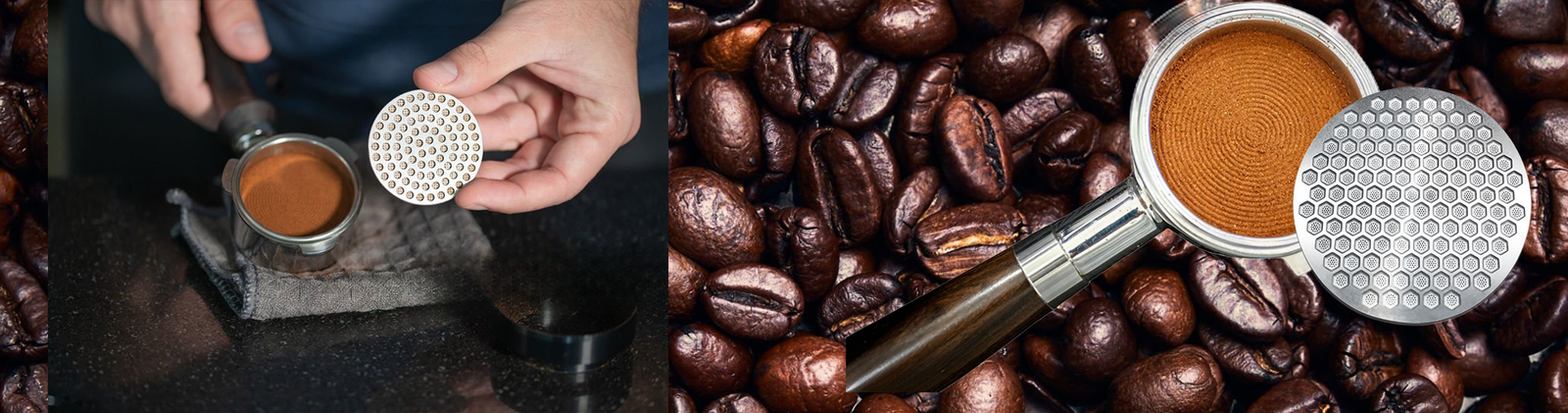
From a manufacturing perspective, the challenge lies in balancing component design with real-world water conditions. Our photochemical etching process creates burr-free holes with micron-level precision, but even perfectly manufactured shower screens cannot prevent scale formation when water chemistry works against them. This reality makes preventative maintenance protocols essential for distributors and their commercial customers.
Quantifying the Impact: Component Lifespan Under Different Water Conditions
For purchasing managers and equipment distributors, understanding the economic implications of water scale is crucial. Our manufacturing data and field testing reveal significant variations in shower screen lifespan based on water treatment approaches:
Untreated hard water environments (250+ ppm TDS) typically necessitate shower screen replacement every 6-12 months in high-volume commercial settings. The combination of scale buildup and increased cleaning frequency accelerates material degradation, even in premium 316L stainless steel components. Distributors serving clients in hard water regions should factor these replacement cycles into their inventory planning and customer support protocols.
In contrast, properly treated water (100-150 ppm TDS with balanced mineral content) can extend shower screen lifespan to 3-5 years or beyond, assuming appropriate cleaning practices. This dramatic difference in component longevity directly impacts total cost of ownership—a critical consideration for wholesale buyers evaluating different supplier options and quality tiers.
The manufacturing implications extend beyond mere replacement frequency. Scale-induced damage often manifests as uneven hole clogging, creating asymmetric flow patterns that affect extraction quality before complete failure occurs. From a B2B perspective, this means that seemingly functional components may actually be degrading customer satisfaction and machine performance, potentially affecting your clients’ business outcomes and your reputation as a supplier.
Preventative Maintenance Strategies for Extended Component Life
Effective preventative maintenance programs represent the intersection of component design, water chemistry, and operational protocols. As a shower screen manufacturer serving B2B clients, we recommend a multi-layered approach that addresses water scale at multiple intervention points.
Water treatment infrastructure forms the foundation of scale prevention. For distributors advising commercial clients, recommending appropriate filtration and softening systems should be standard practice. Reverse osmosis systems with remineralization provide optimal control, delivering water within the ideal 80-120 ppm TDS range that balances scale prevention with adequate mineral content for extraction.
Regular descaling protocols must account for component materials and manufacturing methods. Our photochemically etched shower screens feature burr-free construction that resists scale adhesion better than traditionally drilled alternatives, but periodic descaling remains essential. Citric acid solutions (typically 1-2% concentration) offer effective scale removal without the corrosive effects of stronger acids that can damage stainless steel surfaces and precision hole geometries.
For equipment distributors, establishing clear maintenance schedules based on water hardness levels adds value to your customer relationships while protecting your component sales reputation. In hard water environments, monthly descaling may be necessary; in soft water conditions, quarterly cleaning often suffices. These protocols should be documented and communicated as part of your technical support offerings.
Manufacturing Quality as the First Line of Defense
While no shower screen design can completely eliminate water scale formation, manufacturing quality significantly influences scale resistance and cleaning effectiveness. Our precision etching process creates perfectly round, smooth-edged holes that minimize surface irregularities where scale crystals typically initiate growth. This manufacturing advantage translates to easier cleaning and longer intervals between maintenance interventions—quantifiable benefits for B2B buyers evaluating total cost of ownership.
Material selection also plays a critical role. We specify 316L stainless steel for shower screens specifically because its low carbon content and enhanced corrosion resistance maintain structural integrity through hundreds of descaling cycles. Lower-grade materials may initially cost less but often fail prematurely when subjected to the chemical and thermal stresses inherent in commercial espresso applications.
For distributors and equipment manufacturers, partnering with suppliers who understand these material science fundamentals ensures that your components meet the demands of real-world commercial environments. The marginal cost difference between premium and standard materials becomes negligible when factored across a component’s operational lifespan, particularly in hard water applications where material quality directly determines replacement frequency.
Conclusion: Integrating Water Scale Management into Supply Chain Strategy
Water scale represents an unavoidable reality in espresso equipment operation, but its impact on shower screen lifespan can be substantially mitigated through informed component selection, appropriate water treatment, and systematic preventative maintenance. For B2B partners in the coffee equipment supply chain, understanding these relationships enables more strategic purchasing decisions, better customer advisory services, and improved long-term client satisfaction.
As manufacturers of precision coffee machine components, we recognize that product quality extends beyond the initial sale. By providing shower screens engineered for long service life even under challenging water conditions, and by sharing expertise in scale prevention strategies, we support our distribution partners in delivering comprehensive value to their commercial customers. The intersection of manufacturing quality, water chemistry knowledge, and maintenance protocols represents the pathway to optimal component performance and sustained business relationships throughout the supply chain.