How Caffepress Achieves Cost-Effectiveness Through Etching Technology
How Caffepress Achieves Cost-Effectiveness Through Etching Technology
For Caffepress, providing high-quality espresso machines and components at competitive prices is paramount. This is especially crucial for our overseas distributors and OEM brand partners who rely on consistent supply and attractive margins. A key factor enabling us to achieve this cost-effectiveness is our strategic investment in and mastery of etching technology.
This article delves into how Caffepress leverages etching processes throughout our manufacturing pipeline, showcasing the specific applications that contribute to significant cost reductions, improved quality control, and ultimately, a more profitable partnership for our distributors and OEM clients.
Precision Etching: The Foundation of Cost Optimization
Etching, in its various forms, allows Caffepress to manufacture intricate and precise components with significantly reduced material waste and labor costs compared to traditional machining methods. We utilize both chemical etching (also known as photochemical machining, or PCM) and laser etching, carefully selecting the optimal method based on the component’s material, complexity, and production volume.
Chemical etching involves using chemical etchants to selectively remove material from a substrate, typically metal, that has been protected by a patterned photoresist. Laser etching uses a focused laser beam to vaporize material, creating a precise mark or cut. Both methods offer distinct advantages:
- Chemical Etching: Ideal for high-volume production of thin, intricate parts. Offers excellent accuracy, repeatability, and cost-effectiveness for complex geometries.
- Laser Etching: Provides greater flexibility for prototyping, low-volume production runs, and customization. Enables intricate marking and engraving with exceptional precision.
Applications of Chemical Etching in Caffepress Manufacturing
Chemical etching is instrumental in producing several critical espresso machine components, leading to substantial cost savings. Examples include:
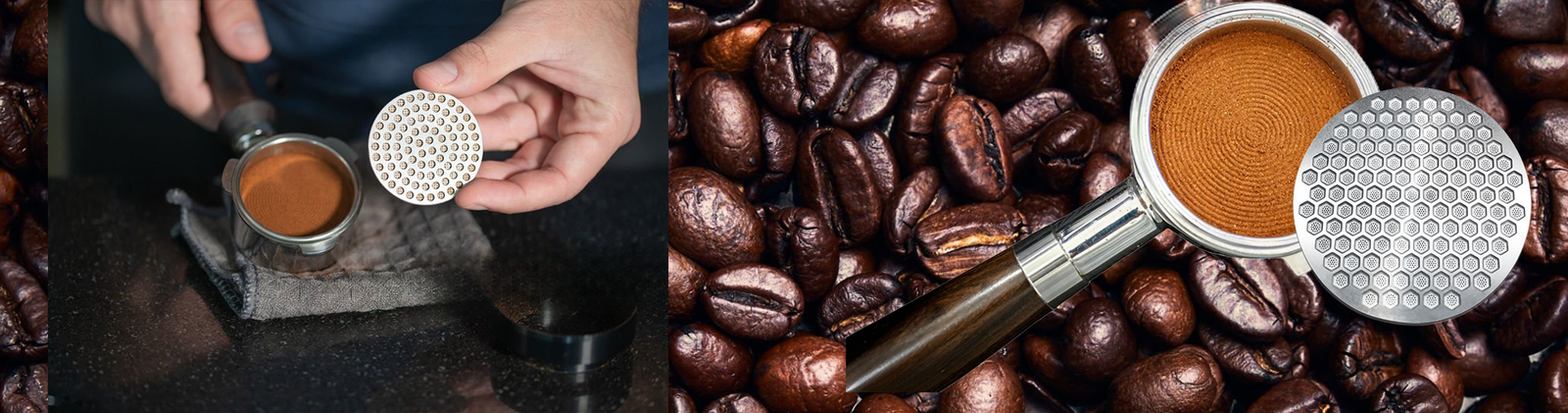
- Precision Filters and Screens: The complex mesh patterns of espresso machine filters and screens require exceptional precision. Chemical etching allows us to create these filters with exacting pore sizes and uniform distribution, ensuring optimal extraction and minimal clogging. This eliminates the need for costly and less precise wire weaving or micro-drilling.
- Flow Restrictors and Diffusers: Precisely controlled flow rates are essential for consistent espresso extraction. Chemical etching enables us to create intricate flow restrictors and diffusers with precisely calibrated micro-channels. This level of precision would be difficult and expensive to achieve with conventional machining.
- Gaskets and Shims: For achieving tight seals and accurate tolerances within the espresso machine, chemically etched gaskets and shims provide superior performance and cost-effectiveness. The process guarantees consistent thickness and precise dimensions, minimizing leaks and improving machine longevity.
Applications of Laser Etching in Caffepress Manufacturing
Laser etching complements chemical etching by offering flexibility and precision for applications such as:
- Component Marking and Serialization: Laser etching enables us to permanently mark components with serial numbers, batch codes, and logos. This ensures traceability throughout the manufacturing process, facilitates quality control, and supports brand identity for our OEM partners.
- Customization and Branding: Laser etching allows for rapid customization of espresso machines with logos, text, or graphics. This is particularly valuable for OEM clients who require branded products tailored to their specific market needs.
- Prototyping and Design Refinement: The speed and flexibility of laser etching make it ideal for prototyping new components and refining existing designs. This allows us to quickly iterate on designs and optimize performance before committing to high-volume production.
Material Efficiency and Waste Reduction
Both chemical and laser etching contribute significantly to material efficiency and waste reduction. Traditional machining methods often involve removing large amounts of material to achieve the desired shape, resulting in considerable waste. Etching, on the other hand, selectively removes material only where needed, minimizing scrap and reducing raw material costs.
Furthermore, the precision of etching allows for tighter nesting of parts on the original material sheet, maximizing the number of components produced per sheet. This optimized material utilization translates directly into lower material costs per unit.
Reduced Labor Costs and Automation
Etching processes can be highly automated, minimizing the need for manual labor. Automated chemical etching lines can process large volumes of parts with minimal human intervention, reducing labor costs and improving consistency. Similarly, CNC-controlled laser etching systems can operate unattended for extended periods, maximizing productivity and minimizing labor requirements.
The reduced labor costs associated with etching contribute to Caffepress’s overall cost-effectiveness, allowing us to offer competitive pricing to our distributors and OEM partners without compromising quality.
Improved Quality Control and Consistency
The inherent precision and repeatability of etching processes lead to improved quality control and consistency. Chemically etched parts exhibit uniform dimensions and smooth surface finishes, minimizing variations and ensuring consistent performance. Laser etching provides equally precise results, allowing for accurate marking and customization.
This improved quality control reduces the risk of defects and rejects, minimizing waste and improving overall efficiency. Furthermore, the consistency of etched parts simplifies assembly and reduces the need for rework, further contributing to cost savings.
Key Benefits Summary
Here is a summary of the key cost-effectiveness benefits Caffepress achieves through the use of etching technology:
- Reduced Material Waste: Etching minimizes material removal, leading to significant cost savings on raw materials.
- Lower Labor Costs: Automated etching processes reduce the need for manual labor, lowering production costs.
- Improved Quality Control: Precise etching ensures consistent dimensions and smooth surface finishes, reducing defects and rework.
- Enhanced Customization Capabilities: Laser etching allows for rapid and cost-effective customization, meeting the specific needs of our OEM partners.
- Faster Prototyping: Laser etching enables rapid prototyping and design refinement, accelerating the product development cycle.
- Higher Production Volume: Chemical etching facilitates high-volume production of complex parts, ensuring consistent supply for our distributors and OEM partners.
Conclusion
Caffepress’s commitment to leveraging advanced etching technology is a cornerstone of our cost-effectiveness strategy. By employing both chemical and laser etching, we can manufacture high-quality espresso machine components with exceptional precision, minimal waste, and reduced labor costs. This translates directly into competitive pricing and improved profitability for our overseas distributors and OEM brand partners, solidifying our position as a trusted and reliable supplier in the global espresso machine market. We continuously invest in and refine our etching processes to ensure we remain at the forefront of manufacturing innovation, providing our partners with the best possible value.