
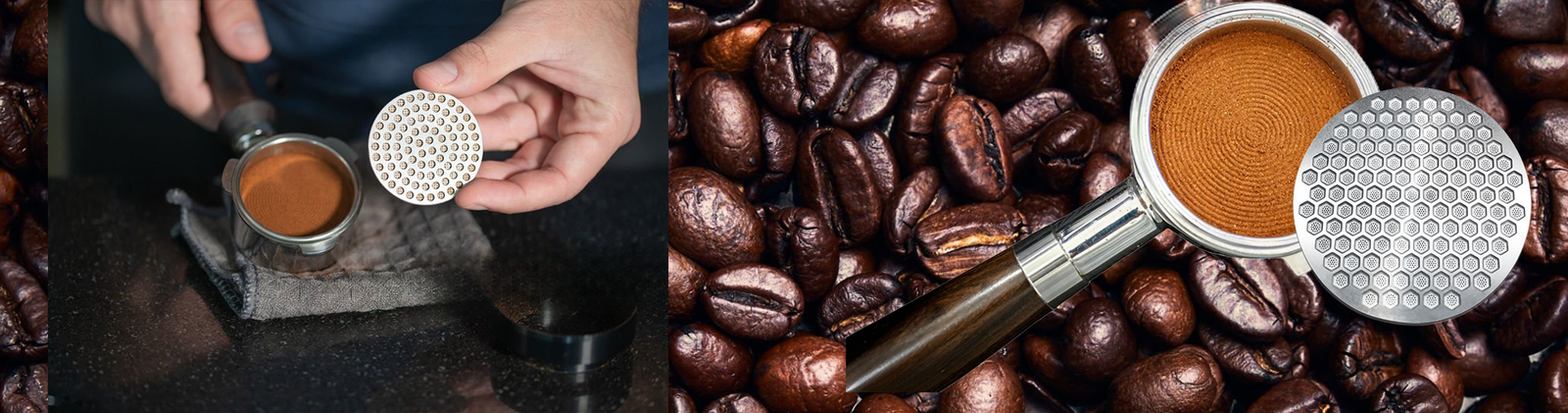
Advantages of Etching Technology in Micro-Filter Manufacturing
Advantages of Etching Technology in Micro-Filter Manufacturing
Micro-filters are critical components in a wide array of industries, from healthcare and pharmaceuticals to automotive and aerospace. Their ability to precisely separate particles and fluids at a microscopic level makes them indispensable for ensuring purity, efficiency, and reliability in various processes. As overseas distributors and OEM brands seeking to provide cutting-edge filtration solutions, understanding the manufacturing technologies behind these micro-filters is paramount. This article delves into the advantages of etching technology, a dominant method used in the production of high-performance micro-filters.
Precision and Accuracy in Micro-Filter Fabrication
Etching technology, in its various forms, offers unparalleled precision and accuracy in creating the intricate structures required for effective micro-filtration. Compared to traditional methods like machining or drilling, etching allows for the fabrication of features with significantly tighter tolerances and more complex geometries. This is particularly crucial for micro-filters where even slight variations in pore size or channel dimensions can drastically impact performance.
Photochemical Etching: A Versatile Approach
Photochemical etching, also known as chemical milling, is a subtractive manufacturing process that uses chemical etchants to selectively remove material from a substrate, typically metal or glass. The process begins with coating the substrate with a photoresist, a light-sensitive material. A mask, containing the desired micro-filter pattern, is then placed over the photoresist and exposed to ultraviolet (UV) light. The exposed areas of the photoresist harden, while the unexposed areas remain soluble. The soluble photoresist is then washed away, leaving a protective layer in the shape of the desired pattern. Finally, the substrate is immersed in a chemical etchant, which dissolves the unprotected areas, creating the micro-filter structure. Photochemical etching allows for intricate patterns with high aspect ratios, ensuring high throughput with minimal material waste. This makes it ideally suited for manufacturing metallic micro-filters for high temperature, high pressure, and corrosive applications.
Plasma Etching: Precision at the Atomic Level
Plasma etching, also referred to as dry etching, uses a plasma of reactive gases to remove material from the substrate. Unlike wet etching techniques like photochemical etching, plasma etching offers greater control over the etching process and produces features with vertical sidewalls and minimal undercutting. This is particularly important for creating micro-filters with highly uniform pore sizes and shapes. There are two main types of plasma etching: isotropic and anisotropic. Isotropic etching removes material equally in all directions, while anisotropic etching removes material primarily in one direction, creating deeper, more precise features. The choice between isotropic and anisotropic etching depends on the specific requirements of the micro-filter design. Plasma etching is commonly used to manufacture silicon-based micro-filters for various analytical and biomedical applications requiring high resolution.
Scalability and Cost-Effectiveness for Mass Production
Beyond precision, etching technology offers excellent scalability and cost-effectiveness for mass production of micro-filters. Once the initial mask or etching parameters are established, replicating the micro-filter design becomes relatively straightforward, allowing for high-volume manufacturing with consistent quality. This is a significant advantage for OEM brands looking to integrate micro-filters into their products on a large scale. The ability to produce thousands or even millions of micro-filters with tight tolerances and consistent performance translates to lower unit costs and greater overall profitability.
Photochemical etching, in particular, lends itself well to high-volume production due to its parallel processing nature. Multiple micro-filters can be etched simultaneously on a single sheet of material, maximizing throughput and minimizing production time. Similarly, plasma etching processes can be optimized for high-speed etching, allowing for rapid turnaround times and large-scale production runs.
Material Versatility in Micro-Filter Design
Etching technology is compatible with a wide range of materials, including metals, polymers, ceramics, and silicon. This material versatility allows for the design and fabrication of micro-filters tailored to specific application requirements. For instance, stainless steel micro-filters are often used in harsh chemical environments due to their corrosion resistance, while polymer micro-filters are preferred for applications where biocompatibility is essential. Silicon micro-filters can be used in MEMS(Micro-Electro-Mechanical Systems) and microfluidic devices. Etching techniques can also be combined with other microfabrication processes, such as thin-film deposition and bonding, to create complex, multi-layered micro-filter structures. This flexibility enables manufacturers to optimize micro-filter performance for a wide range of applications.
Design Freedom and Complex Geometries
Etching processes open up design possibilities beyond traditional manufacturing constraints. Micro-filters can be fabricated with complex geometries, intricate patterns, and high aspect ratios. This allows for greater control over fluid flow, particle separation, and filter efficiency. For example, micro-filters can be designed with precisely engineered pore shapes and sizes to selectively filter out specific particles based on their size or shape. Etching technology also allows for the creation of micro-filters with three-dimensional structures, such as channels, cavities, and pillars, which can further enhance filtration performance. This design freedom enables manufacturers to create custom micro-filters tailored to specific application requirements, giving them a competitive edge in the market.
Environmental Considerations
While etching processes involve the use of chemicals and gases, advancements in technology have led to more environmentally friendly approaches. Chemical etching solutions are being developed with reduced toxicity and improved biodegradability. Closed-loop systems are used to recycle and reuse etchants, minimizing waste generation. Similarly, plasma etching processes are being optimized to reduce the consumption of reactive gases and minimize the emission of greenhouse gases. Micro-filter manufacturers are increasingly adopting sustainable practices to minimize their environmental impact and comply with regulations.
Key Advantages of Etching Technology in Micro-Filter Manufacturing:
- High Precision and Accuracy: Enables fabrication of micro-filters with tight tolerances and complex geometries.
- Scalability and Cost-Effectiveness: Suitable for high-volume production with consistent quality.
- Material Versatility: Compatible with a wide range of materials, including metals, polymers, ceramics, and silicon.
- Design Freedom: Allows for the creation of micro-filters with complex geometries, intricate patterns, and high aspect ratios.
- Environmental Considerations: Advancements in technology are leading to more environmentally friendly etching processes.
Summary
Etching technology offers a compelling solution for the manufacturing of high-performance micro-filters, offering unparalleled precision, scalability, material versatility, and design freedom. As overseas distributors and OEM brands, understanding these advantages allows you to provide your customers with cutting-edge filtration solutions that meet the ever-increasing demands of diverse industries. By partnering with manufacturers who leverage etching technology, you can ensure that your micro-filters deliver superior performance, reliability, and cost-effectiveness.